Here you'll find all collections you've created before.
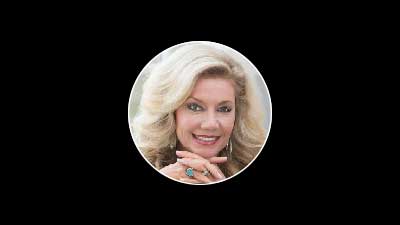
Joni Patry
Joni Patry is one of the most recognized teachers and Vedic astrologers in the world. She was a faculty member for ACVA, CVA and Instructor for online certification programs, published many books, journals and appeared on national and international television shows. As the keynote speaker for international conferences, she has a Japanese website, and teaches in Austria, Turkey and India. She has been awarded the 2015 Jyotish Star of the year and Dr B. V. Raman’s Janma Shatamanothsava Award Jyotisha Choodamani. She publishes an online astrological magazine, Astrologic Magazine http://astrologicmagazine.com/ and has an online University for certification, the University of Vedic Astrology. http://universityofvedicastrology.com
Joey Korn is one of the most accomplished dowsers in the world. Known internationally for an extraordinary ability to change and manipulate energy at all levels, he brings a deep, practical understanding of how to balance these energies . . . and change the way that they influence humans and their lives.
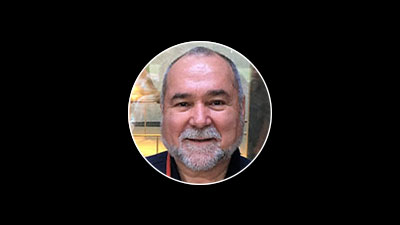
Robert David Steele, former spy, former Marine Corps officer, a proponent of Open Source Everything, Presidential candidate in 2012 and perhaps again in 2024, recommended for the Nobel Peace Prize in 2017 will integrate his life’s experience with his lessons from the works of others to explore love versus fear as a foundation for politics; liberty under natural law versus predatory fascism as we now have in the USA; and the possibilities for cosmic awakening very soon, in a full-on defeat of the Deep State and its Archon masters.
Lee Carrol a.k.a. Kryon
Lee Carroll, Ph.D. has channeled Kryon for 25 years worldwide and is the author of the Kryon Series of 16 books in 24 languages. Well known in metaphysics, Kryon books have made the top seller’s list within months of their release. Having presented seven times at the United Nations in New York, as well as in 33 different countries overseas, Lee attracts audiences in the thousands.
Good health is dependent on the appropriate transfer of information within and between cells. The informational and molecular disharmonies associated with disease can be reversed using appropriate therapeutic signals that stimulate the return to the normal state without adverse effects. One such signal molecule, SLO, has demonstrated clinical utility in a broad spectrum of indications that would at first glance appear to be unrelated. The underlying common thread that links these disorders is representative of the targets to which resonant molecular signals are directed.
Dennis McKenna’s research has focused on the interdisciplinary study of Amazonian ethnopharmacology and plant hallucinogens. His doctoral research (University of British Columbia, 1984) focused on the ethnopharmacology of ayahuasca and oo-koo-he, two tryptamine-based hallucinogens used by indigenous peoples in the Northwest Amazon. Dr. McKenna is author or co-author of 4 books and over 50 scientific papers in peer-reviewed journals.
Paul H. Smith is the longest-serving controlled remote viewing (CRV) teacher active today, having begun his career as an instructor in 1984. He served for seven years in the government’s Star Gate remote viewing program at Ft. Meade, MD (from September 1983 to August 1990). Starting 1984, he became one of only five Star Gate personnel to be personally trained as remote viewers by the legendary founders of remote viewing, Ingo Swann and Dr. Harold E. Puthoff at SRI-International.
Raymon Grace, one of the world’s most extraordinary dowsers, travels the world teaching and demonstrating how dowsing can be used by most anyone to change themselves and the world around them. His down-home, direct approach is sought out by many thousands of searchers who are looking for bettering their lives and dealing with the extraordinary change that the world is experiencing.
Charles Eisenstein is a teacher, speaker, and writer focusing on themes of civilization, consciousness, money, and human cultural evolution. His on-line writings have generated a vast following; he speaks frequently at conferences and other events and gives numerous interviews on radio and podcasts.
In 1980, Jim McCarty joined L/L Research where Don Elkins and Carla L. Rueckert were researching the field of the paranormal in general, and contact with extraterrestrial intelligence in particular. Soon later the Ra Contact began, producing 106 sessions with the social memory complex of Ra. Five books of The Law of One series were published documenting this contact.
Michael Waters is an advanced technology consultant, researcher, inventor, and sustainable recovery strategist. His automated disaster recovery and library preservation systems are used worldwide. Michael has researched cutting edge science and technologies that redefine current understandings in mainstream physics. He is currently on the board of a number of organizations involved in advanced energy, mining, agriculture, and finance.
Chris Robinson
Chris Robinson’s amazing ability to dream about the future in terms that can be reliably translated into people, times, places, and activities has been the subject of books, major university scientific studies, films, articles, TV shows, and just about all forms of media. He has taught many people how to dream about the future and, through his advanced intuitive capabilities, helped thousands to understand how to deal with seemingly impossible personal situations. He is also a healer, having on numerous occasions led people with supposedly terminal conditions to eliminate those issues and return to a healthy life. There is no one else in the world that has Chris’s fascinating background (undercover police work, etc.), coupled with these amazing personal gifts.
Las Vegas headliner, Alain Nu – “The Man Who Knows”, brings us his mind-bending mental and metaphysical abilities. His highly entertaining and most provocative show intermingles feats of mind-reading and spoon bending with other baffling demonstrations that defy explanation.
Joni Patry
Joni Patry is one of the most recognized teachers and Vedic astrologers in the world. She was a faculty member for ACVA, CVA and Instructor for online certification programs, published many books, journals and appeared on national and international television shows. As the keynote speaker for international conferences, she has a Japanese website, and teaches in Austria, Turkey and India. She has been awarded the 2015 Jyotish Star of the year and Dr B. V. Raman’s Janma Shatamanothsava Award Jyotisha Choodamani. She publishes an online astrological magazine, Astrologic Magazine http://astrologicmagazine.com/ and has an online University for certification, the University of Vedic Astrology. http://universityofvedicastrology.com
As Regina’s career progressed, so did her decades long exploration into the world of esoteric and hidden sciences – the reality beyond the 5 sense world. Guidance from these realms suggested it was time to bring her skill set to the world of video/televised media, so in late 2004, along with her husband Scott, she co-created ‘Conscious Media Network’, the first online network to feature full length original video interviews with authors and experts in the realms of the meta-physical, healing arts and alternative theories, opening up a world that many had experienced but never had access to on this scale.
Gaia: In 2012, Conscious Media Network merged with Gaiam TV in 2012, with Regina serving as anchor in their new media division on Open Minds and Healing Matrix. The demand for Regina’s unique perspective on a variety of subjects has drawn attention from conference organizers, moving her into the public as a presenter at conferences. In addition, Regina offers retreats and workshops for those who wish to ‘Dive Deep’ into a new understanding of the nature of reality and life itself. In this venue she shares her exclusive approach to meditation and regression work for a greater understanding of life’s challenges and identifying the innate joys.
Although nominated for a Nobel Prize in physics for his breakthrough theoretical work on zero-point energy, Dr. Harold Puthoff, is most recognized for having been a co-founder of the secret US government “remote viewing” program that successfully used psychics to spy on the Soviet Union and China.
Now a principal and science advisor in a leading-edge effort by former senior military and intelligence managers to disclose the many decades of interest that the US has had in UFOs, he comes to Berkeley Springs on the 8th of February to give a TransitionTalk about his work in making sense out of the UFO phenomena.
Dr. Puthoff’s presentation will include a summary of his current activities with To The Stars Academy, which is on the forefront of bringing into the open formerly highly classified efforts by the government to track, record and understand the meaning of hundreds of encounters that the military has had with UFOs over the past years.
This is an extraordinary opportunity to learn from and question one of the foremost thinkers and leaders of the rapidly accelerating global effort to both make the public aware of what was previously unacknowledged about UFO and alien interaction with humans and also to address the deep questions about what is happening and what it might mean for the future of humanity.
Gregg Braden is a five-time New York Times best-selling author, and is internationally renowned as a pioneer in bridging science, spirituality and human potential! His discoveries have led to 12 award-winning books now published in over 40 languages. The UK’s Watkins Journal lists Gregg among the top 100 of “the world’s most spiritually influential living people” for the 5th consecutive year, and he is a 2017 nominee for the prestigious Templeton Award.
Rosemary Ellen Guiley is a leading expert on the paranormal and supernatural. With more than 50 books – including 10 encyclopedias – and hundreds of articles in print on a wide range of paranormal, spiritual and mystical topics, she possesses exceptional knowledge of the field. Her present work focuses on inter-dimensional entity contact experiences and communication.
John L. Petersen is considered by many to be one of the most informed futurists in the world. He is best-known for writing and thinking about high impact surprises (wild cards) and the process of surprise anticipation. His current professional involvements include the development of sophisticated tools for anticipatory analysis and surprise anticipation, long-range strategic planning and helping leadership design new approaches for dealing with the future.
He has led national non-profit organizations, worked in sales, manufacturing, real estate development, and marketing and advertising, mostly for companies he founded. A graduate electrical engineer, he has also promoted rock concerts; produced conventions; and worked as a disc jockey, among other things.
Mr. Petersens government and political experience include stints at the National War College, the Institute for National Security Studies, the Office of the Secretary of Defense, and the National Security Council staff at the White House. He was a naval flight officer in the U.S. Navy and Navy Reserve and is a decorated veteran of both the Vietnam and Persian Gulf wars. He has served in senior positions for a number of presidential political campaigns and was an elected delegate to the Democratic National Convention in 1984. He was twice the runner-up to be Secretary of the Navy.
In 1989, Petersen founded The Arlington Institute (TAI), a non-profit, future-oriented research institute. TAI operates on the premise that effective thinking about the future is impossible without casting a very wide net. The “think tank” serves as a global agent for change by developing new concepts, processes and tools for anticipating the future and translating that knowledge into better present-day decisions. Using advanced information technology, a core group of bright thinkers and an international network of exceptionally curious people along with simulations, modeling, scenario building, polling and analysis, Arlington helps equip leaders and organizations from many disciplines with tools and actionable perspectives for dealing with uncertain times.
An award-winning writer, Petersens first book, The Road to 2015: Profiles of the Future was awarded Outstanding Academic Book of 1995 by CHOICE Academic Review, and remained on The World Future Societys best-seller list for more than a year. His Out of the Blue: How to Anticipate Wild Cards and Big Future Surprises book was also a WFS best-seller. His latest book is a Vision of 2012: Planning for Extraordinary Change. His coauthored article, (The Year 2000: Social Chaos or Social Transformation?) was one of the most highly acclaimed writings on Y2K. His 1988 book-length report (The Diffusion of Power: An Era of Realignment) was used at the highest levels of American government as a basis for strategic planning. He has also written papers on the future of national security and the military, the future of energy and the future of the media.
Petersen is a past board member of the World Future Society, writes on the future of aviation for Professional Pilot magazine and is the Chairman of the Board of Directors of the Charles A. and Anne Morrow Lindbergh Foundation. He is a former network member of the Global Business Network and a fellow of the World Academy of Art and Science. A provocative public speaker, he addresses a wide array of audiences around the world on a variety of future subjects. When he is not writing or speaking, Petersen invests in and develops resources for large, international projects and advanced technology start-up companies. He lives in the Washington, D.C. area in the eastern panhandle of West Virginia. Speaking Inquiries: Email johnp@arlingtoninstitute.org
Thomas Drake is a former senior executive at the National Security Agency where he blew the whistle on massive multi-billion dollar fraud, waste and abuse; the widespread violations of the rights of citizens through secret mass surveillance programs after 9/11; and critical 9/11 intelligence failures. He is the recipient of the 2011 Ridenhour Truth Telling Prize, a joint recipient with Jesselyn Radack of the 2011 Sam Adams Associates Integrity in Intelligence Award and the 2012 Hugh M. Hefner First Amendment Award. He is now dedicated to the defense of life, liberty and the pursuit of happiness.
John McMichael, PhD, is the founder and CEO of Beach Tree Labs, Inc., a biopharmaceutical company focused on the discovery and early development of new therapeutic agents targeting unmet medical needs. These disorders range from herpes infections to chronic fatigue syndrome to urinary incontinence. His PhD is in virology and immunology from Oregon State University. He headed up the labs at one of the largest private veterinary research practices in the country, was a college professor for more than a decade, and now works out of a small lab on his form in New York state and a larger, more sophisticated lab in Providence, Rhode Island. He holds over 200 patents, has published in books and peer-reviewed journals, and is currently working with his team to begin formal FDA trials for product candidates for chronic traumatic brain injury and Ehlers-Danlos syndromes.
Good health is dependent on the appropriate transfer of information within and between cells. The informational and molecular disharmonies associated with disease can be reversed using appropriate therapeutic signals that stimulate the return to the normal state without adverse effects. One such signal molecule, SLO, has demonstrated clinical utility in a broad spectrum of indications that would at first glance appear to be unrelated. The underlying common thread that links these disorders is representative of the targets to which resonant molecular signals are directed.
William Henry
William Henry is a Nashville-based author, investigative mythologist, art historian, and TV presenter. He is an internationally recognized authority on human spiritual potential, transformation and ascension. He has a unique ability to incorporate historical, religious, spiritual, scientific, archaeological and other forms of such knowledge into factually-based theories and conclusions that provide the layperson with a more in-depth understanding of the profound shift we are actually experiencing in our lifetime.
The spiritual voice and Consulting Producer of the global hit History Channel program, Ancient Aliens, and host of the Gaia TV series The Awakened Soul: The Lost Science of Ascension, and Arcanum, along with his wife, Clare, William Henry is your guide into the transformative sacred science of human ascension. By bringing to life the ancient stories of ascension through art and gnostic texts, he teaches the secrets of soul transfiguration or metamorphosis and connects people to one another across cultures, time and space. With over 30 years of research distilled into 18 books and numerous video presentations, William’s work will guide you to next level of human consciousness and our expanding reality.
William’s present work has taken him into the area of transhumanism, which he first began writing about in his 2002 bestseller, Cloak of the Illuminati. His latest book, The Singularity Is Near: The Next Human, the Perfect Rainbow Light Body and the Technology of Human Transcendence is a primer and a warning for the looming potential transformation of humanity as we speed closer to meshing computer technology with human flesh. William discusses transhumanism as the fulfillment of an ancient impulse to transcend our human bodies. His work has propelled him into the role of human rights activist and advisor on the biopolitics of human enhancement as he informs audiences of the unparalleled perils and potentials of Artificial Intelligence and Transhumanism.
Freddy Silva
Freddy Silva is a best-selling author, and leading researcher of ancient civilizations, restricted history, sacred sites and their interaction with consciousness. He has published six books in six languages, and produced eleven documentaries. Described by one CEO as “perhaps the best metaphysical speaker in the world right now,” for two decades he has been an international keynote speaker, with notable appearances at the International Science and Consciousness Conference, the International Society For The Study Of Subtle Energies & Energy Medicine, and the Association for Research and Enlightenment, in addition to appearances on Gaia TV, History Channel, BBC, and radio shows such as Coast To Coast. He also leads private sell-out tours to ancient temples worldwide. www.invisibletemple.com
Pierre Dubois
Pierre Richard Dubois is Registered Architect and holds two advanced degrees from Columbia University. He has been on a life quest to satisfy his inner and intuitive knowing about consciousness-expanding technologies and wisdom. He is an author, life coach, healer, ascension teacher, and a minister. Pierre has travelled the world and studied many religions and belief systems and found that we are all seeking the same thing: merger back with the uncreated Source of all. An insightful listener and counselor, Pierre deeply aspires to share with others his wisdom and has helped countless people on their journey of healing, expansion, and ascension over the past 20 years.
Frank DeMarco
FRANK DeMARCO has been reporting on his conversations with non-physical beings for more than two decades, in magazine articles, talks, and in a dozen non-fiction books and two novels.
FRANK DeMARCO is the author of 14 books rooted in more than 25 years of psychic exploration, including It’s All One World, Awakening from the 3D World, Rita’s World (two volumes), The Cosmic Internet, The Sphere and the Hologram, and Imagine Yourself Well. Since 2005, he has been actively engaged in an on-going series of conversations with various non-physical beings, including historical individuals, “past lives,” aspects of personal guidance, and a generalized group he calls “the guys upstairs.”
He is also the author of three novels, Messenger, That Phenomenal Background (originally published as Babe in the Woods) and Dark Fire.
William Buhlman
William Buhlman is a recognized expert on the subject of out-of-body experiences. The author’s forty years of extensive personal out-of-body explorations give him a unique and thought provoking insight into this subject. His first book, Adventures beyond the Body chronicles his personal journey of self-discovery through out-of-body travel, and provides the reader with the preparation and techniques that can be used for their own adventure. He has conducted an international out-of-body experience survey that includes over 16,000 participants from forty-two countries. The provocative results of this survey are presented in his book, The Secret of the Soul. This cutting edge book explores the unique opportunities for personal growth and profound spiritual awakenings that are reported during out-of-body experiences.
Over the past two decades William has developed an effective system to experience safe, self initiated out-of-body adventures. He conducts an in-depth six-day workshop titled, Out-of-Body Exploration Intensive at the renowned Monroe Institute in Virginia. As a certified hypnotherapist, William incorporates various methods, including hypnosis, visualization and meditation techniques in his workshops to explore the profound nature of out-of-body experiences and the benefits of accelerated personal development. Through lectures, workshops and his books the author teaches the preparation and techniques of astral projection and spiritual exploration.
The author brings a refreshing look to how we can use out-of-body experiences to explore our spiritual identity and enhance our intellectual and physical lives. William is best known for his ability to teach people how to have profound spiritual adventures through the use of out-of-body experiences. In addition, he has developed an extensive series of audio programs that are designed to expand awareness and assist in the exploration of consciousness. William has appeared on numerous television and radio shows worldwide. William’s books are currently available in twelve languages. The author lives in Delaware, USA. For more information visit his web site, www.astralinfo.org.
Joe McMoneagle
Joe was the longest operational psychic spy in the US government’s very highly classified Stargate program where they used psychics and intuitives to look into installations and people around the world that were of interest to government intelligence agencies. They called the process remote viewing.
As it turned out, the remote viewers discovered that they were – not limited by either time or space and produced drawings and assessments that could not have been obtained in any other way. The Soviets had an active remote viewing program at the same time and it is rumored that Russia, China and the U.S. still have initiatives of this kind that are operational.
Joe’s stories are fascinating, like the time he mentally got inside a Chinese nuclear weapon and saw how the triggering mechanism worked . . . and then went out and bought the parts at Radio Shack to show the scientists in the intelligence agency exactly how it was done. The remote viewers could find submarines at the bottom of the ocean and crashed aircraft in the middle of African jungles.
Dr. Joe Dispenza
Dr Joe Dispenza is an international lecturer, researcher, corporate consultant, author, and educator who has been invited to speak in more than 33 countries on six continents. As a lecturer and educator, he is driven by the conviction that each of us has the potential for greatness and unlimited abilities. In his easy-to-understand, encouraging, and compassionate style, he has educated thousands of people, detailing how they can rewire their brains and recondition their bodies to make lasting changes.
Dr. Joe is also a faculty member at Quantum University in Honolulu, Hawaii; the Omega Institute for Holistic Studies in Rhinebeck, New York; and Kripalu Center for Yoga and Health in Stockbridge, Massachusetts. He’s also an invited chair of the research committee at Life University in Atlanta, Georgia.
As a researcher, Dr. Joe’s passion can be found at the intersection of the latest findings from the fields of neuroscience, epigenetics, and quantum physics to explore the science behind spontaneous remissions. He uses that knowledge to help people heal themselves of illnesses, chronic conditions, and even terminal diseases so they can enjoy a more fulfilled and happy life, as well as evolve their consciousness. At his advanced workshops around the world, he has partnered with other scientists to perform extensive research on the effects of meditation, including epigenetic testing, brain mapping with electroencephalograms (EEGs), and individual energy field testing with a gas discharge visualization (GDV) machine. His research also includes measuring both heart coherence with HeartMath monitors and the energy present in the workshop environment before, during, and after events with a GDV Sputnik sensor.
As a NY Times best-selling author, Dr. Joe has written Becoming Supernatural: How Common People Are Doing the Uncommon(Hay House, 2017), which draws on research conducted at his advanced workshops since 2012 to explore how common people are doing the uncommon to transform themselves and their lives; You Are the Placebo: Making Your Mind Matter (Hay House, 2014), which explores our ability to heal without drugs or surgery, but rather by thought alone; Breaking the Habit of Being Yourself: How to Lose Your Mind and Create a New One (Hay House, 2012) and Evolve Your Brain: The Science of Changing Your Mind (2007), both of which detail the neuroscience of change and epigenetics. His film appearances include Transcendence: Live Life Beyond the Ordinary (2018); HEAL (2017); E-Motion (2014); Sacred Journey of the Heart (2012); People v. the State of Illusion (2011); What IF – The Movie (2010); Unleashing Creativity (2009); and What the #$*! Do We Know? & Down the Rabbit Hole, extended DVD version (2005).
Dr. Todd Ovokaitys
After two years at Northwestern, he was accepted into an accelerated combined graduate/undergraduate program at Johns Hopkins University Medical School, which conferred both B.A. and M.D. degrees. Advanced training was at Georgetown University Hospital, with a Residency and Chief Residency in Internal Medicine followed by a Fellowship in Pulmonary and Intensive Care Medicine.
During his Pulmonary Fellowship, the specialty that concerns the lungs, Dr. Todd began his research with cells of the immune system. Many procedures were done on AIDS patients to diagnose their lung problems. Observing this dire disease firsthand and the toxic results of early medical treatments, Dr. Todd developed a passion for finding better solutions. Towards the end of his Fellowship, he became aware of the benefits of Holistic Medicine for improving the function of the immune system while building rather than impairing the function of other systems.
Inspired to learn more, he moved to Southern California to study with practitioners of Complementary Medicine. In the context of these studies, he had an experience so radical that the course of his life and work were forever transformed.
During a meditation class in the summer of 1989, Dr. Todd paired with another student for an exercise. The process was profound and they took turns, one in the process while the other scribed to record any breakthroughs of awareness. Much as in the Jodie Foster movie “Contact,” the usual anchor points dissolved with the feeling of instant transport to a different dimension of being. There was a doorway or portal to traverse, with a message of the responsibility taken on through the choice to go further.
Instantly upon walking through this doorway, a living form was seen that filled a room – and had the shape of a DNA strand enlarged millions of times. This form communicated that science only partly understood how DNA worked. The linear understanding of DNA as an enormous data string was correct but incomplete. In addition, DNA was a structure of coils within coils in an environment of moving charges that permitted DNA to send electromagnetic signals much as a radio transmitter. Further, DNA could receive and be conditioned by electromagnetic signals. Most significantly, if it were possible to determine and transmit the correct resonant signals, that it was possible to switch the activity of a sick cell to that of a healthy cell, an old cell to that of a young cell.
This experience brought with it a certainty that solutions were possible. After intensive review of the previous work showing the effects of electromagnetic energy patterns on cellular health and function, Dr. Todd located a colleague with the technical expertise to build the desired invention.
Mary Rodwell is a professional counsellor, hypnotherapist, researcher, metaphysician, and founder and principal of ACERN (Australian Close Encounter Resource Network). She is internationally known for her work with ET experiencers and star children. She offers regressions and support for contactees and has organized a buddy system to help those who have had close encounters. Mary has spoken at conferences in Australia, USA, UK, Scandinavia, Hawaii and New Zealand. She is a regular guest on international radio and online shows and writes article for international publications like the UFO Truth Magazine. Mary is co-founder of FREE, a non-profit organization aimed at researching close encounters.
She is the author of, Awakening – How extra-terrestrial contact can transform your life. Mary is working on her second book, The New Human, due for release this year.
Dr. Larry Dossey
Dr. Larry Dossey is a physician of internal medicine and former Chief of Staff of Medical City Dallas Hospital. He received his M. D. degree from Southwestern Medical School (Dallas), and trained in internal medicine at Parkland and the VA hospitals in Dallas. Dossey has lectured at medical schools and hospitals throughout the United States and abroad. In 1988 he delivered the annual Mahatma Gandhi Memorial Lecture in New Delhi, India, the only physician ever invited to do so. He is the author of twelve books dealing with consciousness, spirituality, and healing, including the New York Times bestseller HEALING WORDS: THE POWER OF PRAYER AND THE PRACTICE OF MEDICINE, and most recently One Mind: How Our Individual Mind Is Part of a Greater Consciousness and Why It Matters. His books have been translated into languages around the world. Dr. Dossey is the former co-chairman of the Panel on Mind/Body Interventions, National Center for Complementary and Alternative Medicine, National Institutes of Health. He is the executive editor of the peer-reviewed journal EXPLORE: The Journal of Science and Healing. Dr. Dossey lectures around the world. He lives in Santa Fe with his wife Barbara, a nurse-consultant and the author of several award-winning books.
Kingsley L. Dennis, PhD, is a sociologist, researcher, and writer. He previously worked in the Sociology Department at Lancaster University, UK. Kingsley is the author of numerous articles on social futures; technology and new media communications; global affairs; and conscious evolution. He is the author of several critically acclaimed books including Healing the Wounded Mind, The Sacred Revival, The Phoenix Generation, New Consciousness for a New World, Struggle for Your Mind, After the Car, and the celebrated Dawn of the Akashic Age (with Ervin Laszlo). He has traveled extensively and lived in various countries. He currently lives in Andalusia, Spain.
His homepage is www.kingsleydennis.com
Sharry Edwards
Sharry Edwards has been accused of being too scientific by some, too esoteric by others. In actuality, she is a bridge between both fields of inquiry. Sharry is the acknowledged pioneer in the emerging field of Vocal Profiling using BioAcoustic Biology. For many years she has provided the leading-edge research to show the voice as a holographic representation of the body that can be used to change the face of medicine.
Sharry asks that we imagine a future in which we can be individually identified and maintained through the use of frequency based biomarkers that keep us healthy and emotionally balanced. Her work at the Institute of BioAcoustic Biology has shown that we can each have dominion over those frequencies by individual mind management or a simple remote control that is completely programmable. Using the unique techniques of Vocal Profiling and evaluation, emotional as well as physiological issues can be revealed and addressed.
Her work with the human voice reveals that people who share similar traumas, stresses, diseases, toxicities…share similar, if not identical, vocal anomalies. She brings together ancient knowledge with modern ideas of harmonics and frequency relationship theories to show that math can be used as a form of predictive, diagnostic and curative foundation for wellness. Through entrainment of the frequency grids of the brain, the body can be programmed to support its own optimal form and function.
Integrative Physician Dr. Carrie Hempel and Holistic Pharmacist Brian Sanderoffare both experts in the medicinal use of cannabis in Maryland.
Dr. Hempel is a graduate of the Philadelphia College of Osteopathic Medicine in 2002. As an Osteopathic Physician, she has embraced a holistic approach to patient care, providing loving attention to the relationship between mind, body, and spirit. For the past 11 years she has received specialist training, Board Certification and expertise in several fields including Internal Medicine, Pulmonary & Critical Care Medicine, and Hospice & Palliative Medicine, along with many Integrative modalities. She is a member of the Society of Cannabis Clinicians, the Association of Cannabis Specialists, and is registered with the Maryland Medical Cannabis Commission.
Over the course of her career she has seen the consistent struggle of patients dealing with chronic, progressive, debilitating illness, and witnessed the challenges and limitations of the current pharmaceutical options for pain and symptom managment. Her passion for this population has grown, along with her desire to advocate for patients to have access to non-opioid, holistic options to enhance quality of life and optimize function.
Trained as a pharmacist, Brian Sanderoff has integrated 25 years of experience with his traditional medical training and herbalism, nutrition and numerous other holistic modalities to help clients devise practical, common-sense, safe solutions to most any health issue.
His clients appreciate how he embraces a complementary approach to health and how his holistic “compass” brings them new solutions to their unique health concerns – especially chronic diseases.
Mary Rodwell is a professional counsellor, hypnotherapist, researcher, metaphysician, and founder and principal of ACERN (Australian Close Encounter Resource Network). She is internationally known for her work with ET experiencers and star children. She offers regressions and support for contactees and has organised a buddy system to help those who have had close encounters. Mary has spoken at conferences in Australia, USA, UK, Scandinavia, Hawaii and New Zealand. She is a regular guest on international radio and online shows and writes article for international publications like the UFO Truth Magazine. Mary is co-founder of FREE, a non-profit organisation aimed at researching close encounters.
Steve McDonald is an extraordinary Australian thinker and researcher who arguably knows as much about the structure of the global planetary transition that we are experiencing as anyone on the planet. He draws coherent pictures from the deep insights of Clair W. Graves and paints clear, explanatory images of not only how humanity has evolved to this point, but what is inevitably on our horizon . . . and how this epic transition will continue to play out.
He is currently writing a book about the global paradigm shift that’s taking us beyond the scientific-industrial era. Steve served with the Australian Army for 15 years, including war service as an infantry company commander in Somalia, 1993. He is also a qualified military helicopter pilot and on leaving the army he flew a rescue helicopter in the tropical Mackay-Whitsunday region of Queensland. Building upon his extensive experience in unpredictable environments, after retiring from flying Steve specialized as a change management consultant. He consequently studied the developmental psychology research of Dr Clare W Graves and became one of the first Australians qualified to teach Dr Graves’ theory under the banner of Spiral Dynamics Integral. A long-term struggle with posttraumatic stress has driven Steve’s deep interest in human nature and consciousness. He is a founder of Psychedelic Research in Science & Medicine, an Australian non-profit association. He is also a founder of AADII, a non-profit company created to support worldwide transformational change.
Although Robert Coxon had been studying and composing music for many years, it was after taking the Silva Mind Control course that he realized how powerful sound could be in relaxing the body and opening the consciousness. He then decided to write his first album.
Cristal Silence quickly became a major hit throughout Canada, staying on top of the charts for many years. This was the beginning of his continuing phenomenal success as composer and solo artist. For the last 29 years he has performed only his original compositions in concert. Robert has been nominated four times for the prestigious “Felix” award (French Canada equivalent to the Grammy), and became Canada’s best-selling New Age artist. His international breakthrough came after composing The Silent Path in 1995. This album was an instant hit in Canada, the USA and France. After hearing The Silent Path, Lee Carroll, internationally renowned author of 15 bestselling Kryon and Indigo books, contacted Robert and asked him to join his team on tour. Through the years this has given Robert the opportunity to experience different cultures and inspires him to write music honoring these many countries he performs in.
Robert offers us nine albums, the latest three being The Infinite, essence of life, Goddess -The Power of Woman and Passion Compassion Alegeria.
Gary Sycalik has been described as an entrepreneur, businessman, project developer/manager, consultant/advisor, organizational troubleshooter, strategic planner, facilitator, futurist, business and social architect, complex problematic game designer (policy, strategic, tactic levels) and writer. Gary brings a robust horizontal and vertical functional capability to any project from the conceptual to operational stage.
Penny Kelly is an author, teacher, speaker, publisher, personal and spiritual consultant, and Naturopathic physician. She travels, lectures, and teaches a variety of classes and workshops, and maintains a large consulting practice. She has been involved in scientific research and investigations into consciousness at Pinelandia Laboratory near Ann Arbor, MI.